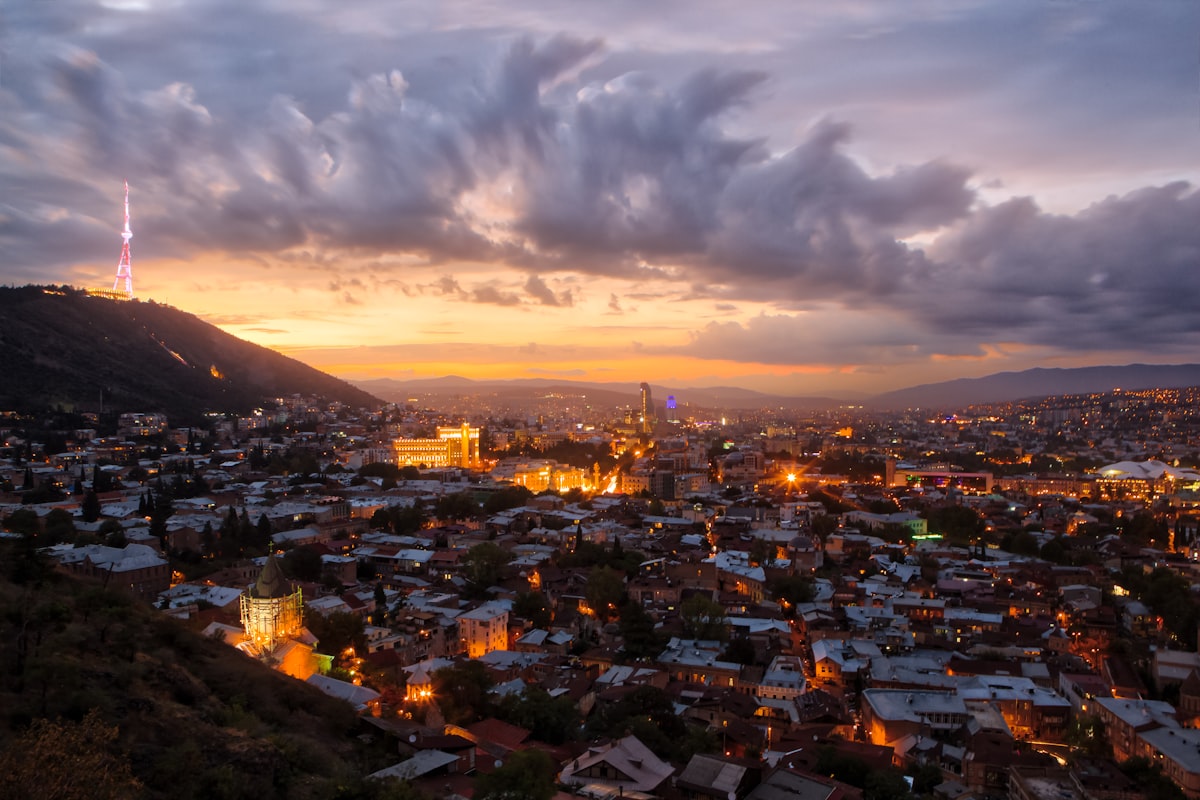
Every relocation prospectus lists the same virtues — sunshine, safety, schools — until the words stop meaning anything. Georgia earns them back the honest way. This is a country where dinner guests are treated as an event, where three generations share a table without anyone finding it remarkable, and where a family arriving from abroad discovers that 'family-friendly' is not a marketing category but the operating system of the society itself.
Start with the practicalities, because they are extraordinary. Citizens of more than 95 countries may enter Georgia visa-free and stay for a full 365 days — not ninety days with extensions, but a year, renewable by crossing a border. The cost of living runs 50–60 per cent below Western European and North American cities: a family can rent a spacious apartment in a good Tbilisi district for a fraction of the equivalent in Munich or Boston, and a generous meal out for four costs what a single main course does in London. Add a flat 20 per cent income tax, no social contributions and territorial taxation of foreign income, and the household arithmetic changes category.
Four seasons, two hours apart
Geography is Georgia's quiet luxury. The Black Sea coast around Batumi is humid-subtropical — palms, citrus and a long warm season — while the Greater Caucasus rises to 5,000-metre peaks with genuine alpine winters. From Tbilisi, the ski resort of Gudauri is two hours north; the wine country of Kakheti ninety minutes east; the sea five hours west, or forty minutes by air. Few places on earth compress this much climate into so little distance, and families use it: sea in July, snow in January, and mountain air whenever the city needs escaping.
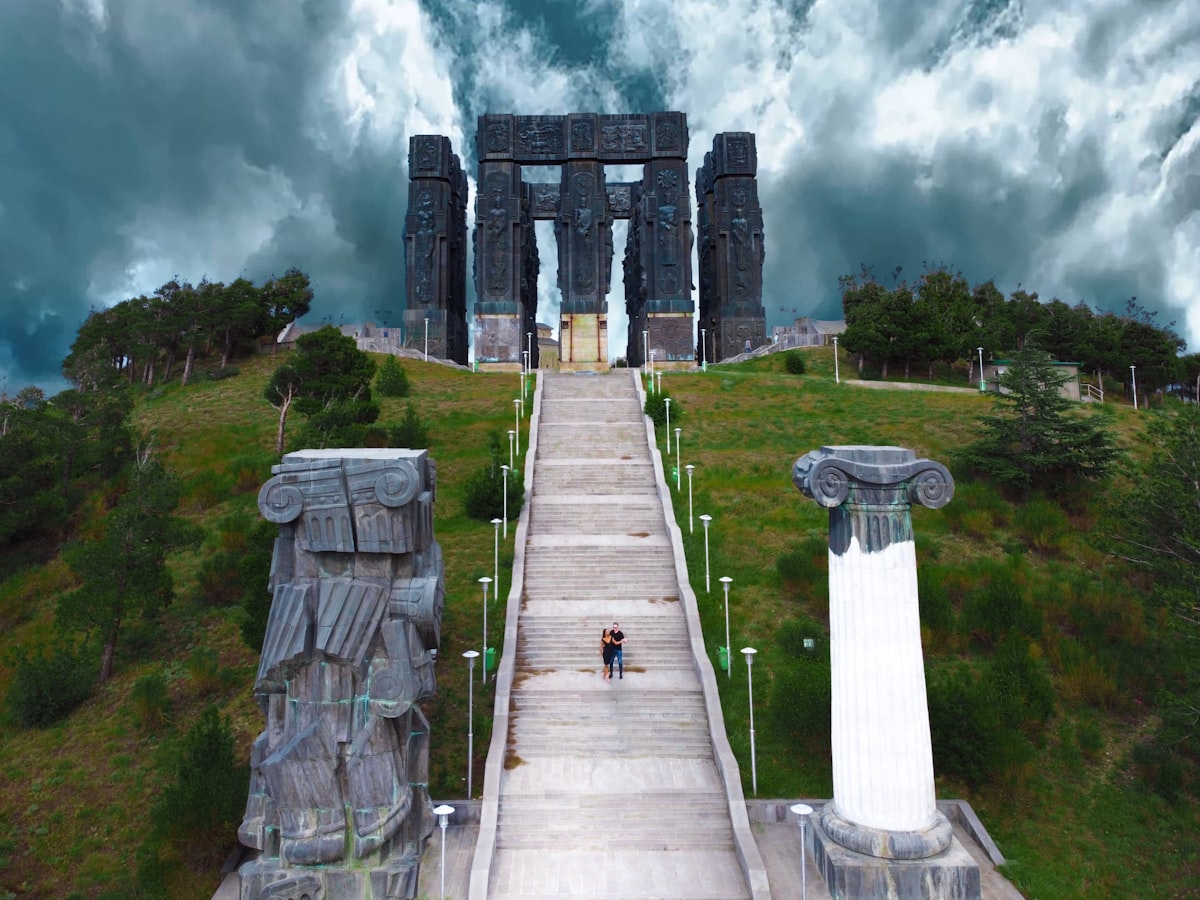
The oldest wine culture on earth, and food to match
Georgians have been making wine for roughly 8,000 years, and the traditional qvevri method — fermentation in buried clay vessels — is inscribed by UNESCO as intangible cultural heritage. The table that surrounds it, the supra, is the country's true parliament: khachapuri and khinkali, walnut-rich vegetable pastes, grilled meats, toasts that turn strangers into guests and guests into family. Children are not merely tolerated at these tables; they are the point of them.
Schools, safety and the texture of daily life
Tbilisi and Batumi both offer international schooling — IB and Cambridge-curriculum options, American and European programmes — at fees dramatically below Gulf or Western equivalents, alongside a public system that produces formidable mathematicians and musicians. Georgia consistently ranks among the safer countries in its wider region; violent crime is rare, and the evening promenade culture — families out late, children playing in squares — tells its own story. Healthcare is private-led, inexpensive by Western standards, and increasingly internationalised in the main cities.
We chose Batumi for our own company for the same reasons families choose Georgia: the numbers work, and the life works better.— Olena Kysla, Co-founder & General Manager, Polaris Corporate Services
The honest caveats
Georgia is not a finished product. Bureaucracy outside the excellent registries can be uneven; Georgian is a beautiful but demanding language, though English is widespread among the young and Russian among the older generation; and infrastructure between the showcase cities and the mountain regions varies. From March 2026 the property-linked residence route requires an investment of at least USD 150,000, and long-term residence planning deserves professional attention rather than optimism. These are manageable frictions — but they are real, and pretending otherwise serves no family well.
- Citizens of 95+ countries can live in Georgia visa-free for a full 365 days.
- Cost of living runs roughly 50–60% below Western European and North American cities.
- The country spans subtropical coast to alpine peaks — sea, vineyards and ski within a two-hour radius of Tbilisi.
- An 8,000-year wine tradition and the supra table culture make Georgia one of the world's great food destinations.
- International schools, low crime and affordable healthcare complete a genuinely family-first environment.
Polaris Perspective
Relocating a family is a structuring exercise wearing a lifestyle disguise: residence status, tax position, schooling contracts and property all have to land in the right order. Polaris supports families end-to-end — residence planning, family relocation and the tax design that keeps a move from becoming an audit. As a family-founded firm now present in Batumi ourselves, we treat every relocation as if it were our own — because ours was.