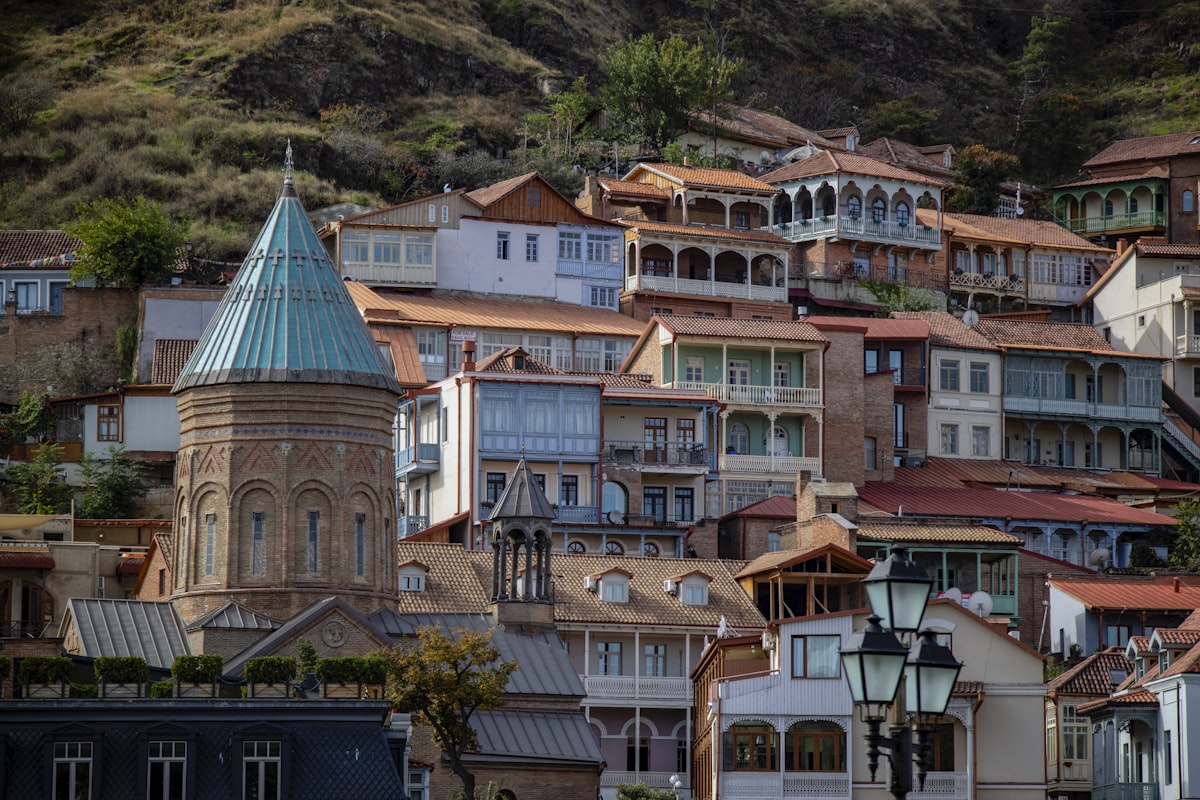
Georgian property has spent five years rewarding conviction. New-build prices in Tbilisi have risen roughly 57 per cent since 2020; the capital now averages about USD 1,312 per square metre, up 4.1 per cent in the past year, while Batumi — the Black Sea city carrying the tourism boom on its shoulders — averaged USD 1,395 per square metre after a 16.5 per cent annual surge. Bank lending tells the same story from the inside: real-estate loans grew 27.9 per cent in 2025, the fastest of any category in the Georgian banking book.
For foreign buyers, the mechanics remain among the friendliest anywhere. Non-residents may own apartments, houses and commercial property outright and in their own name — only agricultural land is restricted — and title transfers at the National Agency of Public Registry are routinely completed the same day for a modest fee. There is no stamp duty in the Western sense, recurring property taxes are low and income-linked, and rental income can be taxed at a flat 5 per cent under the residential leasing regime. It is, structurally, one of the lowest-friction property markets in the world.
The March 2026 rule change every buyer should know
Property and residence have long been linked in Georgia, and here the rules have just moved: from 1 March 2026, the minimum qualifying real-estate investment for the property-linked temporary residence permit rises to USD 150,000. The change is explicitly designed to push the market toward higher-value, longer-horizon purchases — and it means that buyers whose plans include residence should structure the acquisition against the new threshold from the outset, not discover it at the immigration counter.
Where the demand is coming from
Three currents feed the market. Tourism converts visitors into buyers of short-let and resort stock, above all in Batumi and the state-designated Gonio investment zone. Relocation — professionals and families drawn by the 365-day visa-free regime and the tax system — supports long-let demand in Tbilisi's Vake, Saburtalo and old-town districts. And regional capital continues to treat Georgian title as a hard asset in a soft neighbourhood: registry data has long shown foreign nationals accounting for a meaningful share of purchases, approaching a fifth of transactions in Batumi in strong months. Office and retail development in Tbilisi adds a commercial layer that barely existed a decade ago.
Underwriting like an adult
The warnings are as clear as the momentum. Batumi's Airbnb average daily rate slipped from USD 31 to USD 28 even as booked nights grew — classic evidence of supply arriving faster than demand in the short-let segment. Off-plan purchases carry developer risk that no registry can cure, and 'guaranteed yield' schemes deserve the scepticism that phrase has earned everywhere on earth. The buyers who do well in Georgia buy location and title quality first, developer covenant second, and projected yield a distant third — ideally with the contract reviewed by someone whose fee does not depend on the sale closing.
- Batumi prices rose 16.5% in a year to ~$1,395/m²; Tbilisi averages ~$1,312/m² with new-builds up 57% since 2020.
- Foreigners can own Georgian property outright with same-day title registration; only agricultural land is restricted.
- From 1 March 2026 the property-linked residence permit requires a minimum USD 150,000 investment.
- Rental income can qualify for a flat 5% regime, and recurring property taxes are low.
- Short-let supply is outpacing demand in Batumi — underwrite on location and title, not on promised yields.
Polaris Perspective
Polaris acts for buyers, not for projects. We structure Georgian acquisitions end to end — ownership vehicle selection, due diligence on developer and title, contract review, and the residence strategy against the new USD 150,000 threshold — coordinated with cross-border tax planning where the buyer's life spans several countries. Operating from Batumi ourselves, we walk the sites we advise on.