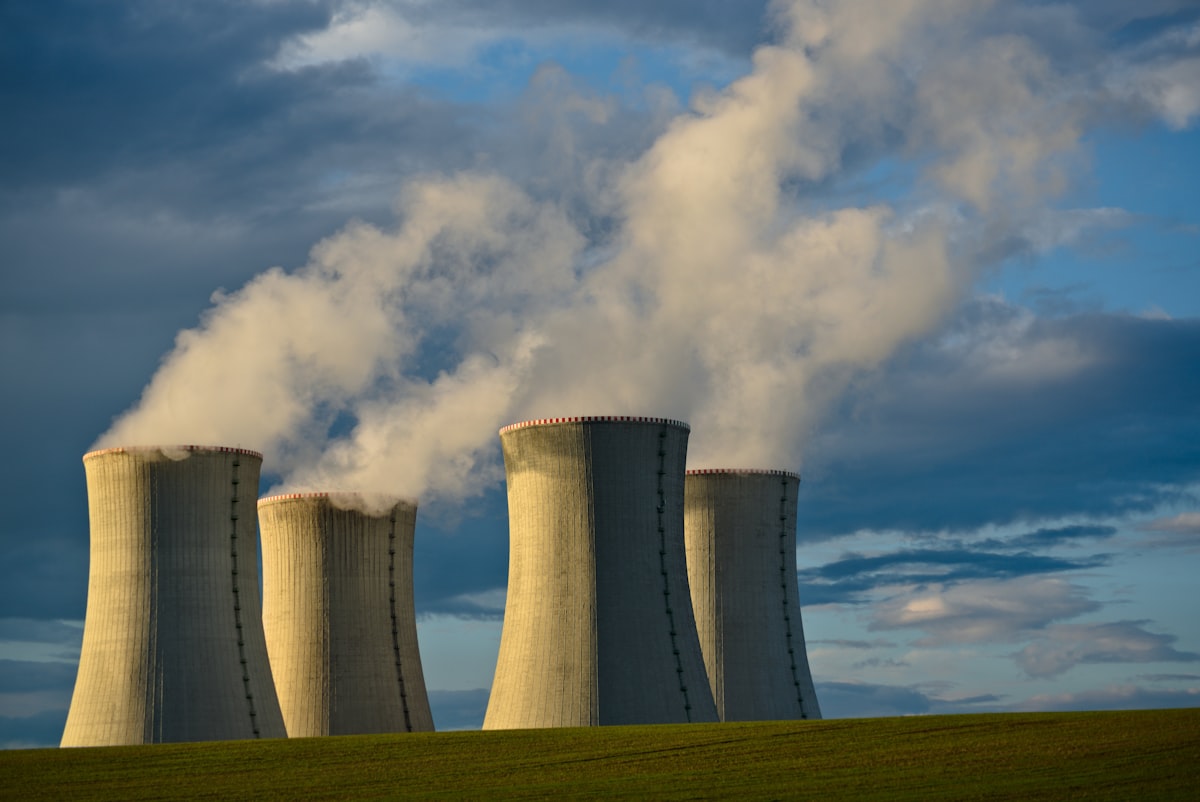
On 17 May 2026, a drone struck an external generator transformer at the Barakah nuclear power plant in Abu Dhabi's Al Dhafra region, igniting a fire that emergency crews brought under control without injury. The Federal Authority for Nuclear Regulation confirmed that radiological safety was never in question: the reactor buildings, containment systems and spent-fuel facilities were untouched, and all four units continued generating at normal output. Two further drones were intercepted before they reached the site. Within seventy-two hours the UAE attributed the launch to Iraqi territory, identifying Iran-aligned militias as the operators — the same pattern of pressure on Gulf energy infrastructure that has run through the regional conflict since the strikes on Iran on 28 February 2026.
For a board, the instinct after an episode like this is to swing between two equally unhelpful poles: alarm or dismissal. Alarm treats a contained incident as the leading edge of catastrophe and freezes decision-making. Dismissal treats it as noise and learns nothing. The professional response is neither. It is a narrow, unsentimental operational review — the kind that takes a morning, produces a short list, and leaves the company measurably better prepared than it was the day before.
What actually changed — and what did not
Begin with what did not change, because it is most of the picture. The federation's institutions remained stable. The plant kept running and the national grid was unaffected. Abu Dhabi and Dubai airports operated on schedule. Banking, ports and government services continued without interruption. The US Embassy, which had issued a precautionary shelter advisory, lifted it within days. Structurally, the UAE on 18 May looked very much as it had on 16 May: an economy that the conflict has, if anything, pushed to accelerate its industrial and diversification agenda rather than stall it.
What did change sits at the margin — in logistics and in cost, not in fundamentals. That distinction matters, because the marginal shifts are precisely the ones a company can plan around, while the fundamentals are not in a board's gift to control.
The marginal shifts that do matter
Three changes are worth tracking. First, aviation. Carriers are running additional threat assessments on western-approach flight paths and may file contingency routings that lengthen block times into Abu Dhabi and Dubai. The effect on a passenger is minutes; the effect on a tightly-scheduled air-freight operation can be a missed connection. Second, insurance. War-risk cover for aircraft, marine hulls and cargo operating within roughly 200 nautical miles of the Barakah site is being repriced. The range is wide — from modest surcharges on routine cargo to multiples of the pre-conflict premium for high-exposure assets in the western corridor.
Third, screening. Border authorities have intensified cargo inspection and random vehicle checks at western land crossings. Passenger processing remains within normal parameters, but a logistics manager running just-in-time inventory through those crossings should build in schedule contingency rather than assume historical clearance times. None of this is a reason to change where a company is based. All of it is a reason to revisit a handful of operating assumptions.
The companies that moved through the spring with the least disruption were not the ones that predicted events correctly. They were the ones whose structures did not depend on any single prediction being correct.Polaris Corporate Services
The continuity questions worth asking
A focused review answers more than a general anxiety does. Six questions cover most of the ground. Are employees' Emirates ID cards, passports and emergency contacts current and centrally accessible? Have travel-approval thresholds for discretionary trips to Western Region energy sites been set deliberately, rather than left to individual judgement? Does the company's insurance — war-risk, business-interruption, and the exclusions buried in both — still say what management assumes it says? Is there a single-point dependency anywhere in the western-corridor supply chain? Could the business operate for two weeks if one key facility were inaccessible? And the question most often missed: is treasury access, banking authority and signing power concentrated in one person or one location?
Related Insights
How the UAE Thrived Through Global Crises: Lessons in Economic ResilienceFrom the 2008 financial crisis through COVID-19, the structural factors behind the UAE's ability to absorb shocks.Strait of Hormuz, Fujairah and Why Geography Is Reshaping UAE TradeThe Fujairah corridor and post-OPEC energy independence create new options for trade and logistics structuring.After OPEC: The UAE's Geopolitical Repositioning and What It Signals for BusinessThe UAE's strategic repositioning and what it means for investor confidence and corporate planning.The insurance question, examined properly
Most boards believe they understand their insurance until they read it. An episode like the Barakah strike is the cue to read it. The relevant point is not whether the company holds cover, but whether the cover responds to the scenario the company actually faces — and war-related disruption is the area where policy wording and management assumptions most often diverge. The table below sets out the lines worth reviewing and the specific clause to put to a broker for each.
| Coverage line | What it is for | The clause to check |
|---|---|---|
| War-risk (property) | Physical damage to assets from hostile acts | Whether it covers consequential loss or only direct damage; the geographic-radius exclusion |
| Business interruption | Lost income while operations are suspended | Whether it triggers only on damage to your own premises, or also on denial-of-access and supplier failure |
| Marine & cargo war-risk | Goods in transit through the Gulf | The held-covered clause and the notice period required when a routing changes |
| Aviation war-risk | Surcharges on owned or chartered aircraft | Radius-based surcharge zones around named sites and how often they are repriced |
| Trade credit | Buyer default caused by disruption | Whether a political-risk endorsement exists and the waiting period before a claim pays |
| Key-person / evacuation | Relocating staff during an escalation | Whether the limit is per-incident or an annual aggregate that one event could exhaust |
The exercise is not about buying more cover. In most cases the existing programme is adequate and the review simply confirms it. The value is in replacing an assumption with a fact — and in discovering, on a quiet morning rather than during an incident, that a denial-of-access trigger is missing or a radius clause has tightened.
Treasury and signatory resilience
The dependency that surfaces most often, and is corrected least often, is concentration of financial authority. If one individual holds sole signing power over the company's principal accounts, or if banking access depends on hardware tokens kept in a single office, then the business has built a continuity risk that has nothing to do with geopolitics and everything to do with structure. The fix is ordinary corporate hygiene: dual signatories, a documented escalation path, banking access that can be exercised from more than one location, and a corporate secretary function that holds clean, current records independent of any one person. A company that can move money and sign documents on a bad week has solved most of what a continuity plan is for.
What a tested continuity plan actually contains
A continuity plan is not a binder. The binder no one has opened since it was written is worth less than a single page that the management team has actually walked through. A useful plan is short, specific and rehearsed. It names who decides, on what authority, when the chief executive is unreachable. It lists the three or four systems the business genuinely cannot operate without, and where the backup for each one sits. It records how the company communicates with staff if normal channels fail. And it has been tested at least once, as a desktop exercise, so that the gaps were found in a meeting room rather than in an emergency. The Barakah episode caused no damage to the UAE's companies. It did, usefully, create a reason to confirm that these structures exist.
- A drone struck a generator transformer at Barakah on 17 May 2026; reactor safety and plant operations were unaffected, and the UAE traced the launch to Iraqi territory.
- The structural picture is stable. The real shifts are marginal — longer contingency flight routings, repriced war-risk insurance, tighter cargo screening — and all are plannable.
- Boards should run a focused six-question continuity review covering staff documents, travel thresholds, insurance wording and single-point dependencies.
- Read the insurance, do not assume it: confirm denial-of-access triggers, radius clauses and aggregate limits before an incident, not during one.
- Concentrated signing authority and single-location banking access are the dependencies most worth fixing — and they are within a board's direct control.
Polaris Perspective
Geopolitical resilience is not a slogan; it is a set of structures. The clients who moved through the spring of 2026 with the least disruption were, almost without exception, those whose signing authority, banking access and corporate records were not concentrated in one person or one jurisdiction. Polaris advises on fiduciary structures, corporate secretarial resilience and continuity planning for UAE-based companies. If recent months have surfaced a single dependency in your structure, the time to resolve it is now — not during the next episode.
Arrange a Consultation →